
Cement is responsible for roughly 7–8% of global CO₂ emissions, and the great majority of that is not fuel — it is chemistry. Turning limestone into clinker releases CO₂ from the limestone itself, and no amount of efficiency in the kiln removes it.
Which is why the fastest available lever is not a better kiln. It is using less clinker per tonne of cement.
What GGBFS actually is
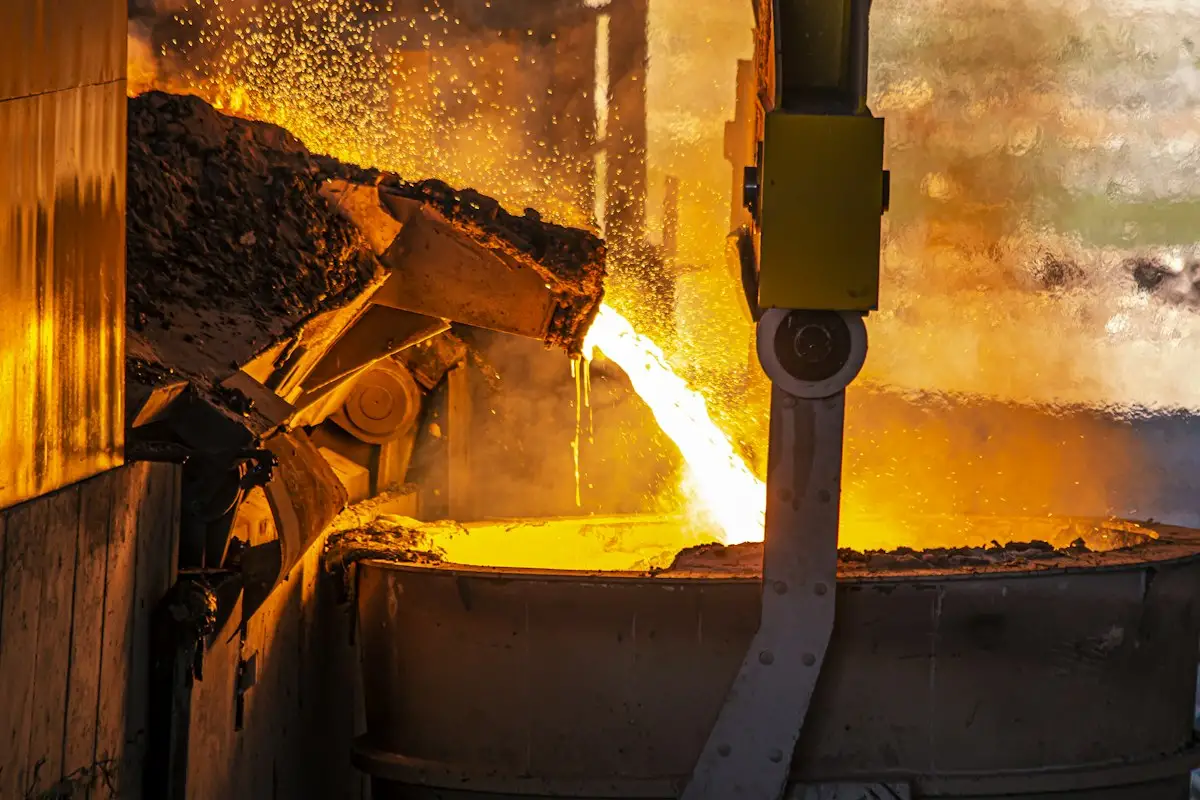
When molten blast furnace slag is quenched rapidly in water rather than allowed to cool slowly, it freezes into a glassy, non-crystalline granule instead of an inert rock. Ground to cement fineness, that glass is a latent hydraulic binder: it will not hydrate on its own, but in the alkaline environment created by Portland cement it does, forming the same calcium silicate hydrate that gives concrete its strength.
This is the distinction that matters commercially. An inert filler dilutes the binder. GGBFS replaces it.
Emissions against substitution rate
Because the CO₂ travels with the clinker, the reduction is close to linear with replacement level:
| Slag substitution | Approx. CO₂ (kg per tonne of cement) | Reduction vs OPC |
|---|---|---|
| 0% (ordinary Portland cement) | ~840 | — |
| 30% | ~600 | ~28% |
| 50% | ~440 | ~48% |
| 70% | ~280 | ~67% |
Figures are indicative and depend on the clinker factor, the kiln's fuel mix and how the slag is allocated between the steel and cement products in the LCA. They are the shape of the relationship, not a quotation.
What it does to the concrete
Slag cement is not a compromise made for the environment's sake. It changes the material, mostly favourably:
- Lower heat of hydration. Decisive in mass pours, where thermal cracking is the failure mode.
- Denser microstructure. Finer pore structure means lower chloride permeability — the single most important property for marine and coastal structures.
- Sulphate resistance. Less free calcium hydroxide for sulphates to attack.
- Higher long-term strength. Slag concrete typically overtakes plain OPC after about 28 days.
- Slower early strength. The real trade-off. In cold weather or fast form-cycling it needs planning around.
The cost side
| Component | Relative cost | Note |
|---|---|---|
| Ordinary Portland cement | 100 | Baseline; carries the full clinker energy and process cost |
| GGBFS | 60–80 | Granulation and grinding only — no calcination |
| 50/50 blend | 80–90 | Before any carbon pricing is applied |
The gap widens wherever CO₂ carries a price, and it widens again where a project is scored against an environmental product declaration.
Where Griniu sits
Industrial mineral recovery is one of the streams Griniu Industrial handles: taking a by-product that a steel plant has to manage and putting it into a market that needs it. The economics and the emissions arithmetic point the same direction, which is the rarer and more durable kind of case.